Healthcare across the world is at a critical inflection point. Over the past few decades, advances in medical science, pharmaceuticals, and technology have significantly improved life expectancy and survival rates. Yet, paradoxically, access to timely, affordable, and high-quality care is becoming more difficult.
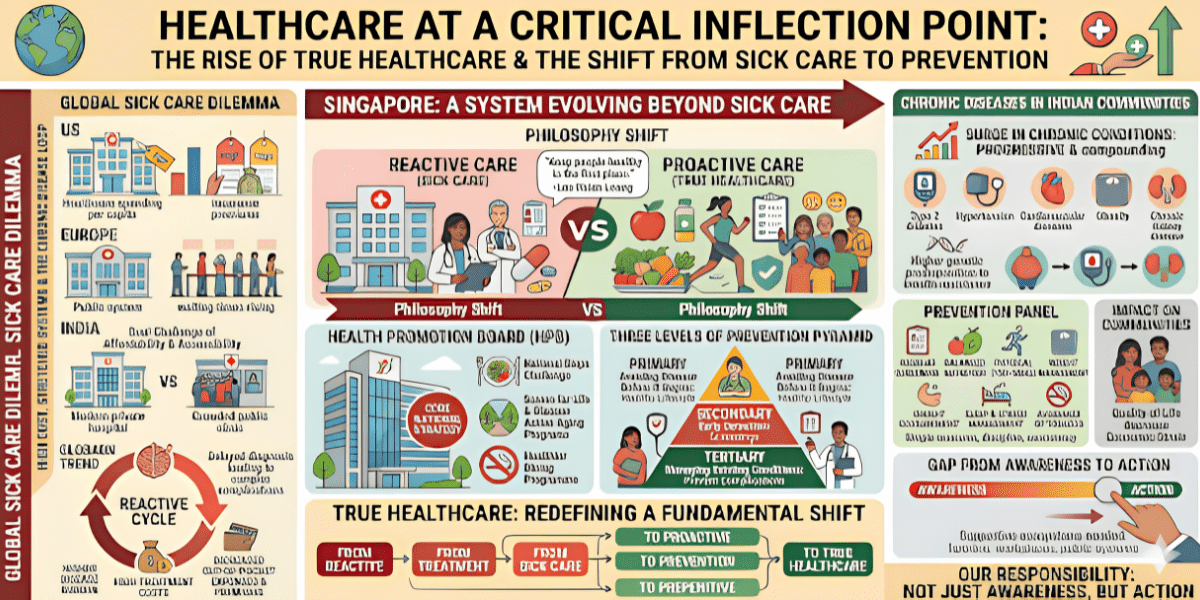
In the United States, healthcare spending has reached unprecedented levels, often placing a heavy burden even on insured individuals. Across Europe, publicly funded systems provide broad access, but rising waiting times for specialist consultations and elective procedures are a growing concern. Australia faces similar pressures, with increasing insurance premiums and mounting strain on public healthcare infrastructure.
Closer home, India presents a dual challenge of affordability and accessibility. While private healthcare offers world-class treatment, it often comes with significant out-of-pocket costs. Public healthcare systems, though steadily improving, are frequently stretched by demand. States like Tamil Nadu have historically led in public health delivery, yet even here, the rising burden of chronic diseases is testing system capacity.
These trends are not isolated to healthcare systems alone—they ripple into everyday life. Rising medical costs influence career decisions, delay financial planning, and place increasing stress on families. Health insurance premiums continue to climb globally, driven largely by the long-term cost of managing chronic conditions.
Singapore: A System Evolving Beyond ‘Sick Care’
Amid these global challenges, Singapore stands out for its ability to balance quality, accessibility, and cost discipline. Its healthcare model—built on a mix of government support, individual responsibility, and prudent financing—has consistently ranked among the best in the world.
What is particularly noteworthy, however, is Singapore’s deliberate shift in recent years—from treatment to prevention.
The Health Promotion Board (HPB) has been central to this transformation. Through nationwide initiatives encouraging healthier eating, regular physical activity, smoking cessation, and early health screenings, preventive care has been embedded into daily life. These are not peripheral programmes—they are core to national strategy.
This philosophy was succinctly captured by former Prime Minister Lee Hsien Loong, who observed that much of what we call ‘healthcare’ is, in reality, ‘sick care’—systems designed to treat people only after they fall ill. The real goal, he emphasized, is to keep people healthy in the first place.
That distinction lies at the heart of what we might call ‘True Healthcare.’
The Rise of Chronic Diseases
A major driver of today’s healthcare challenges is the global surge in chronic diseases—conditions that are long-lasting, often progressive, and require continuous management rather than one-time treatment.
In Indian communities in particular, several chronic conditions are highly prevalent:
* Type 2 diabetes
* Hypertension (high blood pressure)
* Cardiovascular diseases
* Obesity and metabolic syndrome
* Chronic kidney disease
India is often described as the diabetes capital of the world, with South Asians showing a higher genetic predisposition to insulin resistance. When combined with sedentary lifestyles, dietary patterns high in refined carbohydrates, and increasing urbanization, this has led to earlier onset and faster progression of disease.
What makes chronic illnesses especially concerning is their compounding nature. Diabetes increases the risk of heart disease; hypertension affects kidney function; obesity underpins multiple metabolic disorders. The result is not just a medical challenge, but a lifelong financial and emotional burden.
The Hidden Cost of Reactive Care
When healthcare systems are designed primarily around treatment, they become reactive—and expensive. Managing chronic diseases over decades involves repeated consultations, long-term medication, and, in many cases, hospitalizations for complications.
This creates a cycle: higher disease burden leads to higher system costs, which in turn drives up insurance premiums and out-of-pocket expenses. The impact extends far beyond the healthcare sector, affecting productivity, workforce participation, and overall quality of life.
Prevention as the Foundation of True Healthcare
If treatment is becoming increasingly costly and complex, the most effective solution lies in reducing the need for it. Preventive care is no longer optional—it is essential.
Preventive healthcare can be understood across three levels:
* Primary prevention: avoiding disease before it begins
* Secondary prevention: early detection through regular screening
* Tertiary prevention: managing existing conditions to prevent complications
Singapore’s approach demonstrates that prevention can be implemented at scale. However, its success ultimately depends on individual ownership.
Practical Pathways to Prevention
The most impactful preventive measures are often simple, but they require discipline and consistency:
* Regular health screenings
* Balanced nutrition
* Physical activity (at least 150 minutes per week)
* Weight management
* Sleep and stress management
* Avoidance of tobacco and moderation of alcohol
While these recommendations are widely known, the real challenge lies in sustained adherence. Modern lifestyles—characterized by long working hours, sedentary habits, and high stress—make consistency difficult.
From Awareness to Action
Bridging the gap between awareness and action requires more than intent. It calls for supportive ecosystems—families, workplaces, and public systems that make healthier choices easier and more sustainable.
Singapore’s model shows that when prevention is embedded into daily life, healthier living becomes the default rather than the exception.
Redefining Healthcare
True healthcare is not defined by the number of hospitals we build or the sophistication of treatments we provide. It is defined by how effectively we keep people from needing them.
It represents a fundamental shift:
* From reactive to proactive
* From treatment to prevention
* From ‘sick care’ to true healthcare
As individuals, the responsibility lies with us—not just to be aware, but to act.
This wisdom is not new to us. As the timeless Thirukkural reminds us:
“மருந்தென வேண்டாவாம் யாக்கைக்கு அருந்தியது அற்றது போற்றி உணின்.”
When we live right—when we eat mindfully, move regularly, and care for our bodies—we reduce the need for medicine itself. Long before modern healthcare systems, this simple truth was already known.
And perhaps that is where true healthcare begins—not in hospitals, but in the choices we make every single day. Start small. Start today. Perhaps it begins with something as simple as a 30-minute walk after dinner—but over time, it could become one of the most meaningful gifts you give yourself, and the people who want to see you healthy for years to come.