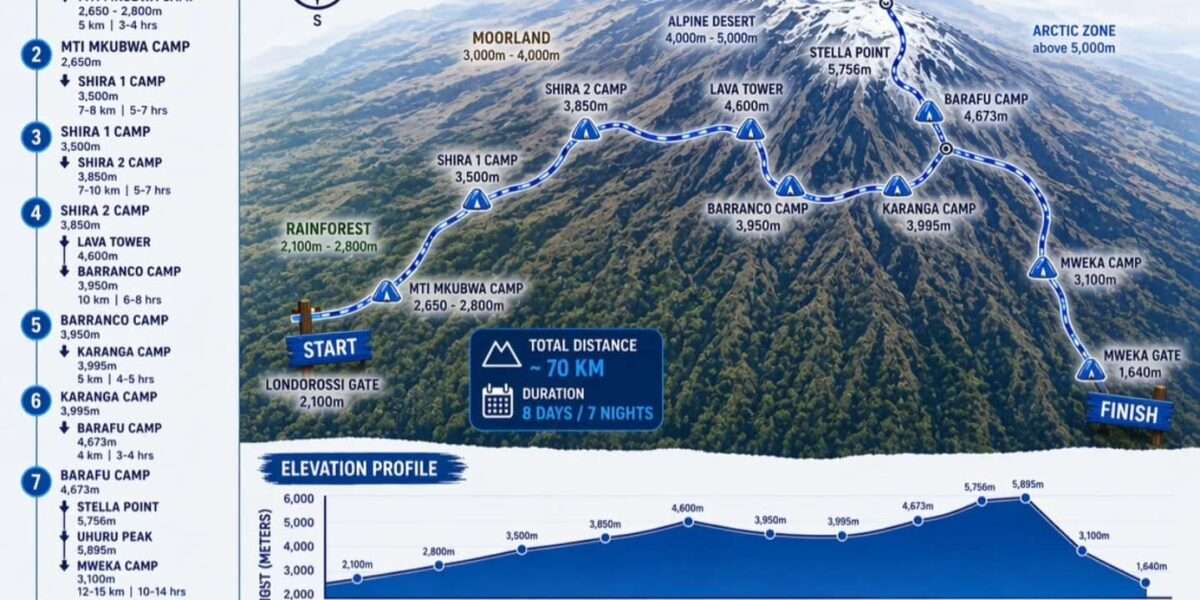
Rising majestically from the rolling plains of Tanzania, Mount Kilimanjaro is the highest mountain in Africa and the tallest free-standing mountain in the world. Known as the “Roof of Africa,” it peaks at 5,895 meters (19,341 feet). Unlike many other major peaks, Kilimanjaro is a stratovolcano, and its trek takes adventurers through five distinct ecological zones—ranging from lush tropical rainforests to a desolate, arctic-like summit. It is a place where the Swahili spirit of “pole pole” (slowly, slowly) isn’t just a suggestion, but a necessity for survival.
Beyond the Clouds: My 4,300-Meter Masterclass
They say Mount Kilimanjaro is a mountain to be conquered, but as I stood at the 4,300-meter mark, watching helicopters and planes glide below me like silver toys, I realized the mountain isn’t a trophy—it’s a teacher.
Our expedition was months in the making. Along with friends and college mates, I had prepared to the best of my ability, researching every input to ensure we were ready. We chose the seven-day Lemosho route, a path of breathtaking scenery and grueling transitions. For four days, I was in my element, absorbing the legendary Kenyan hospitality and the raw beauty of God’s creation. I felt strong, having conquered 56 kilometers of trekking and achieved a 1,000-meter climb in a single day, capped by seven hours of continuous, steep ascension.
Then came the fifth day, and with it, a challenge no guidebook had fully prepared me for: the crowds and the dust. While many talk about the cold, few mention the thick dust generated by the sheer volume of trekkers. At 11:00 AM on September 5th, as the oxygen began to thin, my lungs reached their limit. My breath shortened, and severe wheezing—a familiar foe—returned.
I could have pushed for the final two hours of that stage, but I knew my lungs could not withstand the 5,895-meter summit. Thinking of my family and the long-term recovery involved, I made the decision to withdraw. I was safely rescued, returning to base with a heart full of history rather than regret.
The “Pole Pole” Philosophy
On the mountain, the Swahili phrase “pole pole”—step by step—is a way of life. It teaches that rushing leads to exhaustion, while a slow and steady pace takes you further. I embraced this rhythm until environmental limits intervened.
In a world obsessed with the “summit or nothing” narrative, it’s easy to feel like stopping short is a failure. But the mountain whispered a different truth:
Redefining Success: Achieving doesn’t have to look the same for everyone.
The Power of Effort: Success isn’t just getting to the top; it’s the resilience, effort, and determination you pour into the journey.
Beyond Our Control: Not reaching the peak after giving your best effort does not mean you failed; it means you encountered limits—like altitude or health—that were far beyond your control.
Lessons from the Thin Air
Even without standing on the highest peak, my morale remains unbroken. I lived a simple life without gadgets, free from the noise of social media and the constant notifications of everyone else’s lives. This silence allowed me to focus on the climb, the camaraderie, and the incredible people—young and old—challenging themselves against the sky.
I also realized that success is never a “one-man show”. From the guides, porters, and cooks who took care of us, I realized that goals are attained only through teamwork and the support of others. Most importantly, the experience taught me that time waits for no one. It reminded me to love my family, show affection while I can, and tell the people who inspire me exactly how much I appreciate them.
The Summit Within
If you find yourself unable to achieve a specific goal at this moment, remember: the opposite of achieving is not failure. It is simply being unable to achieve at that specific moment. It is an invitation to measure your success based on your own journey rather than on a comparison to how far someone else has gone.
You never truly know your ability until you attempt something wholeheartedly. I discovered an endurance and courage I didn’t know I possessed. So, cherish every step you take. Be filled with the memories of the hospitality you received, the sights you witnessed, and the strength you found.
The summit is a point, but the journey is a lifetime. Don’t let the lack of a “peak” photo diminish the magnitude of your climb. Progress matters more than speed, and genuine effort counts just as much as reaching the top.
Written by Sherin Singh (David Saul Singh’s daughter)
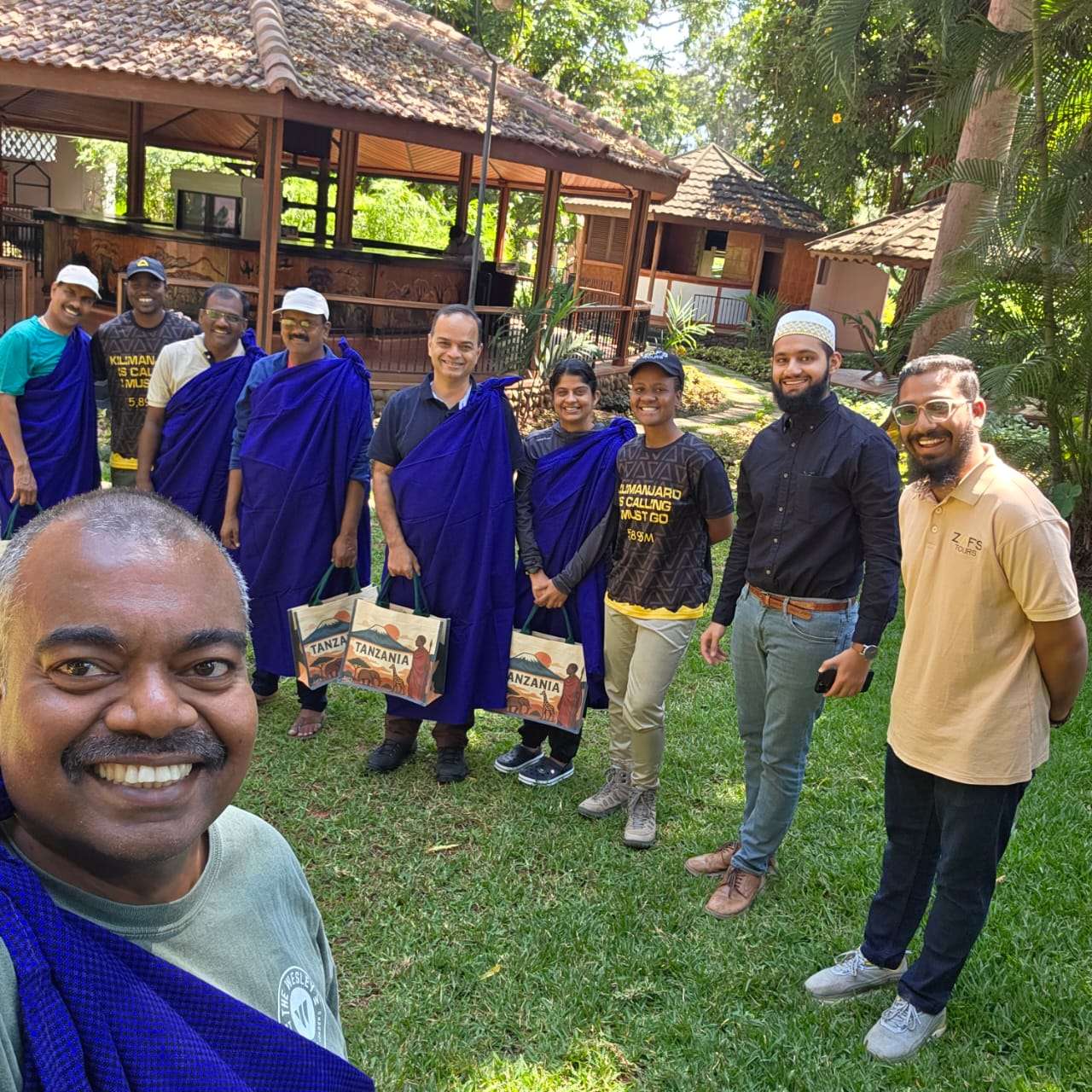
The Team
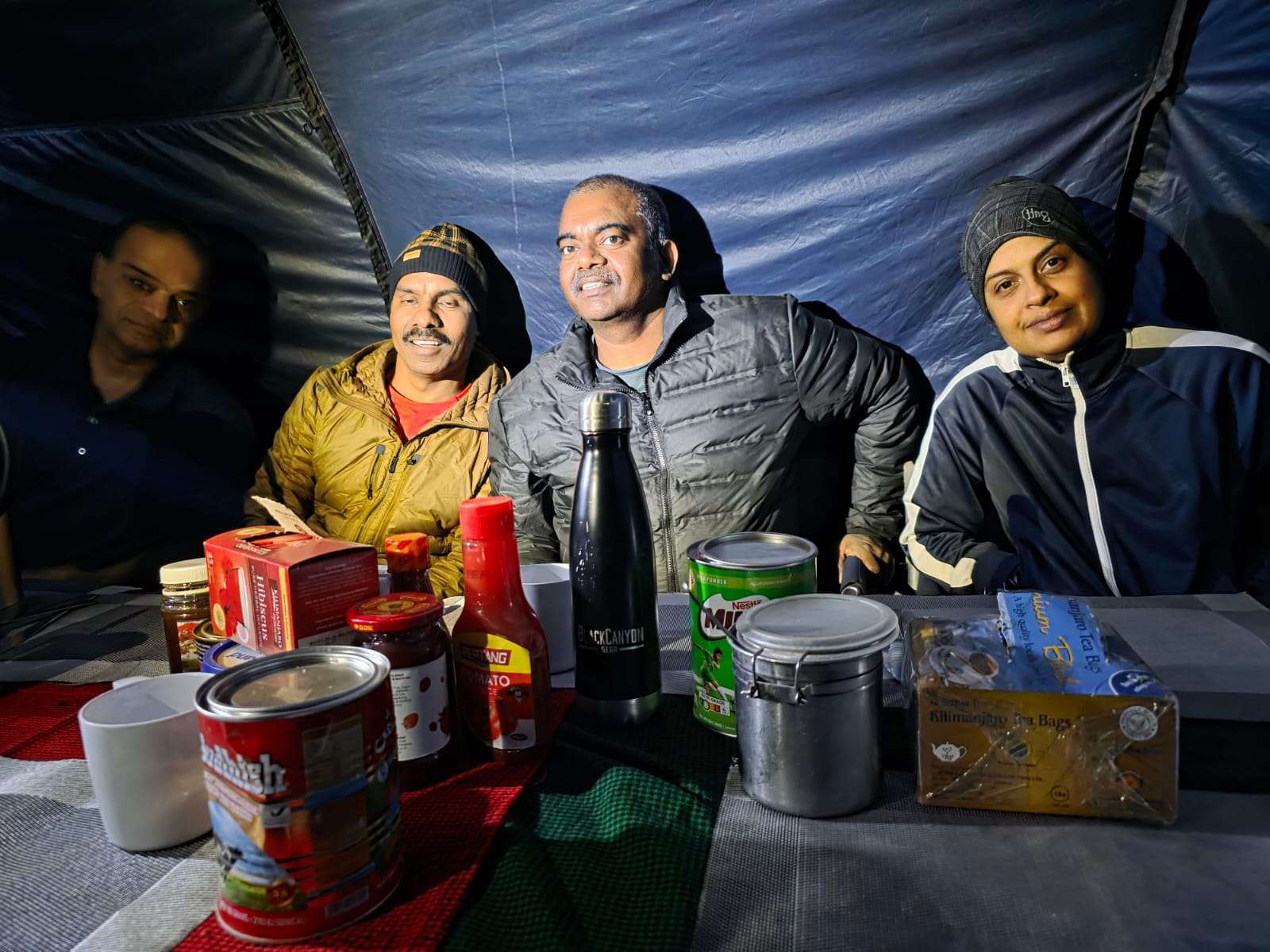
Dining hall…tent
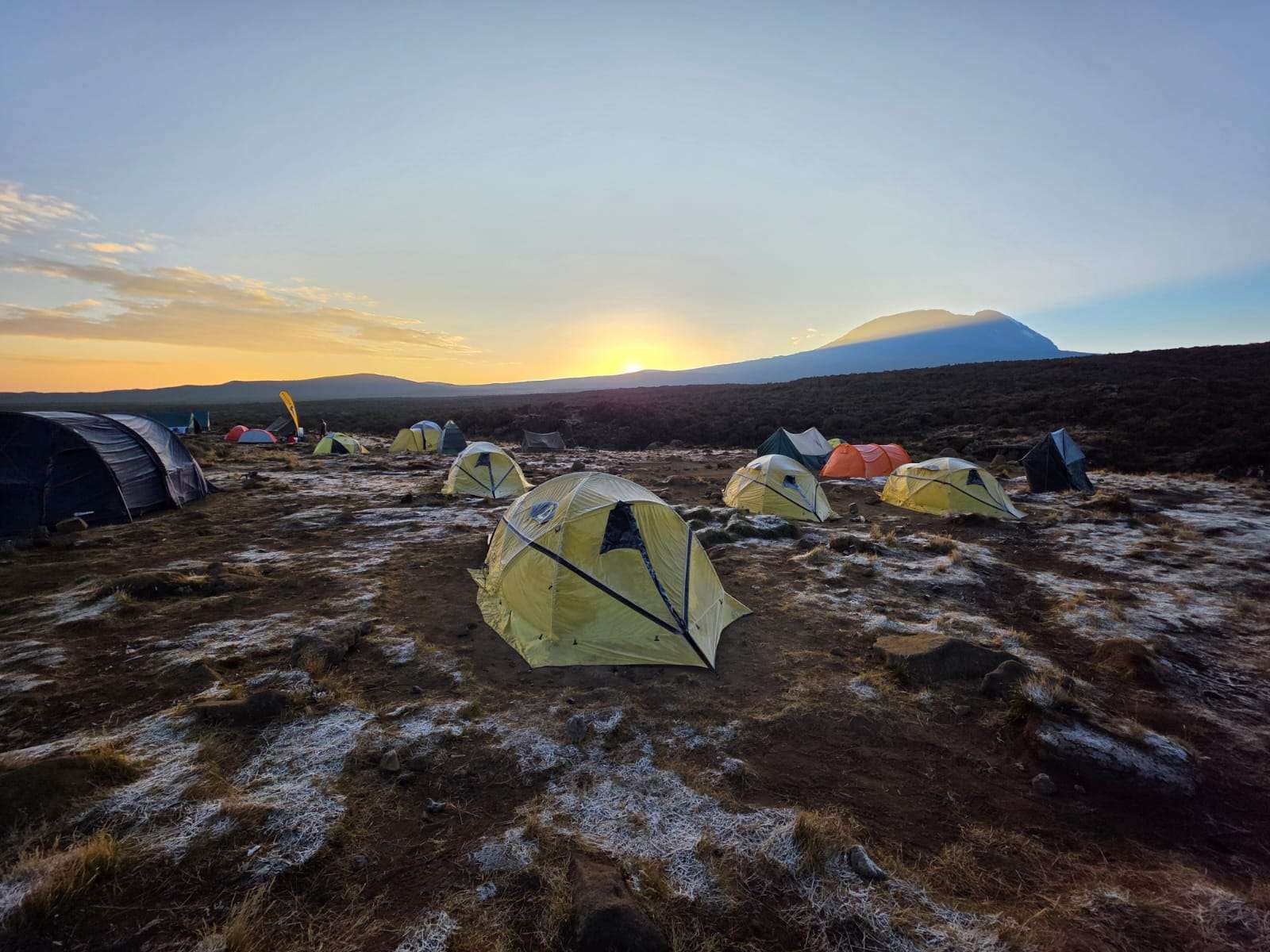
The sunrise above the camp
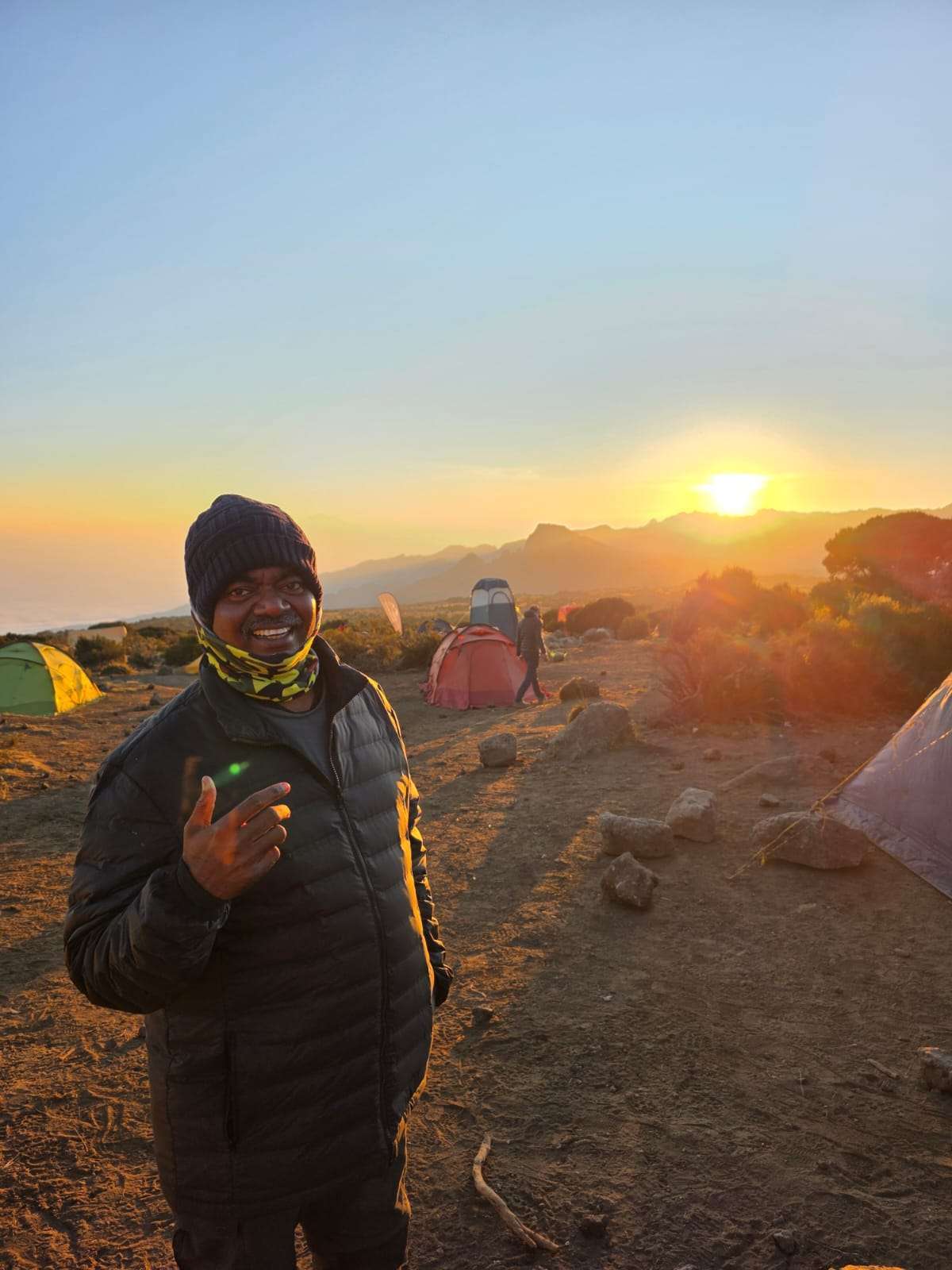
Last sunrise above 3500 meters
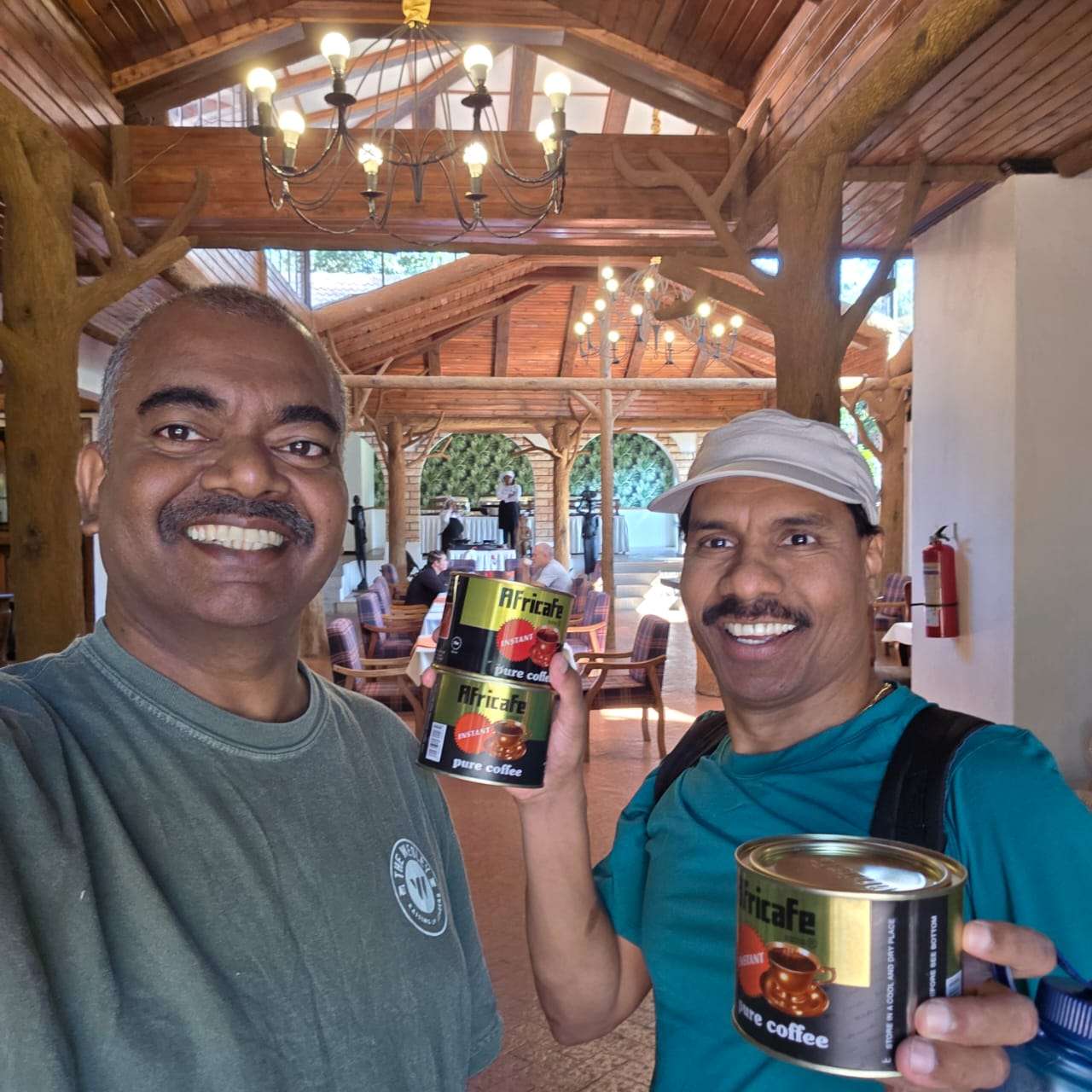
1994 passed out alumni and batch mate, Uday and I.
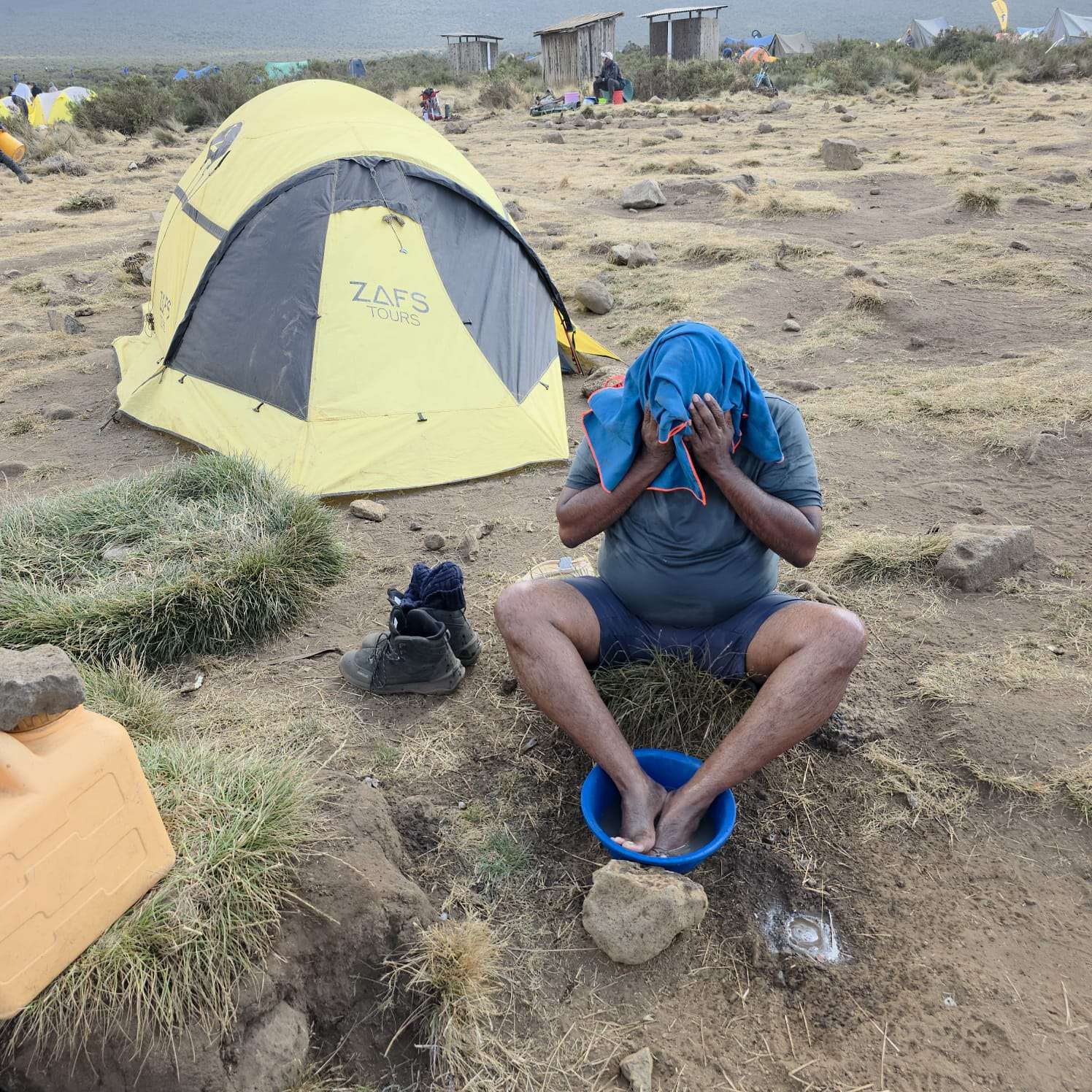
Evening wash as water is limited to a few liters per day
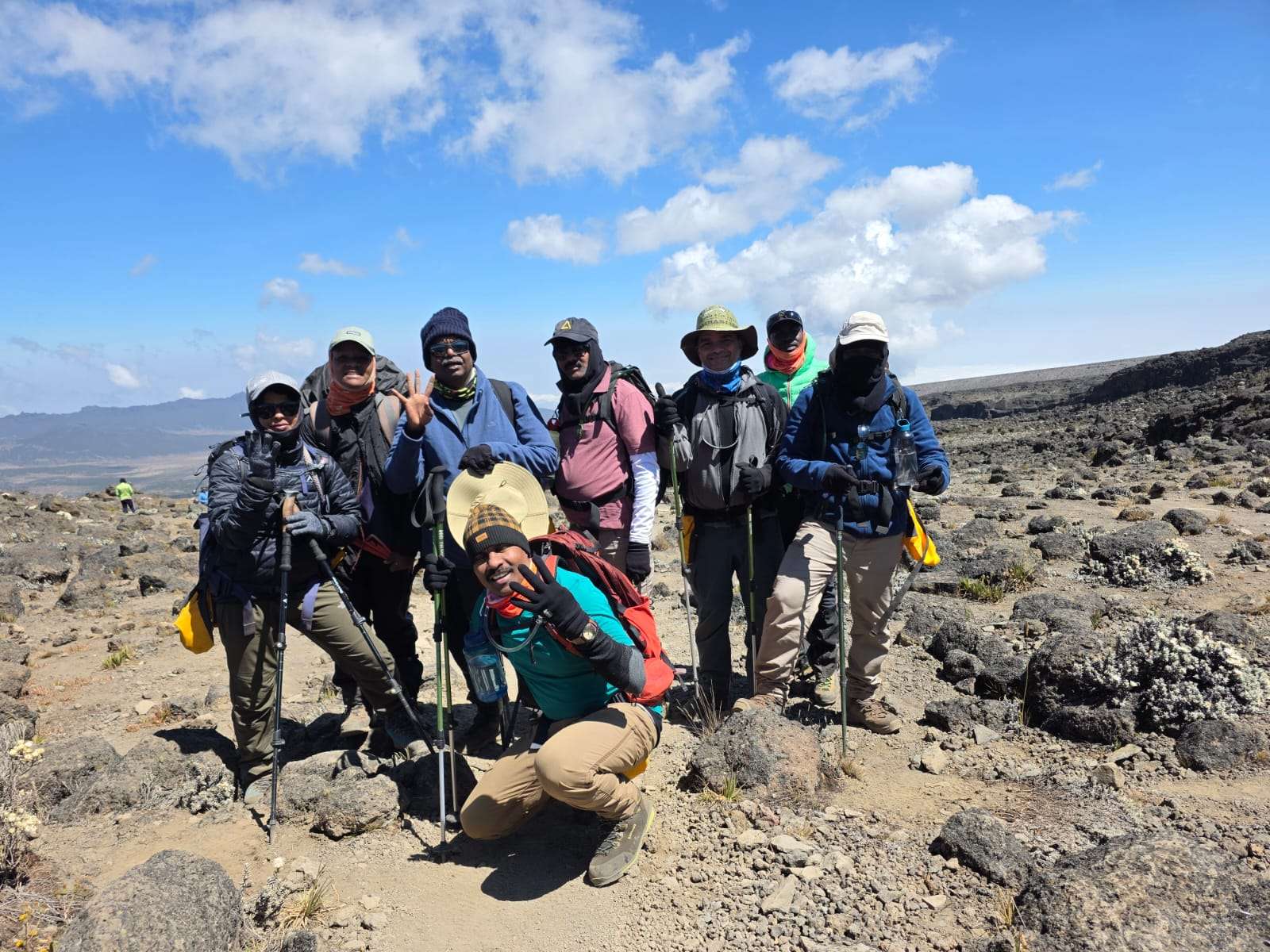
Last photo at around 4300 meters with group before returning
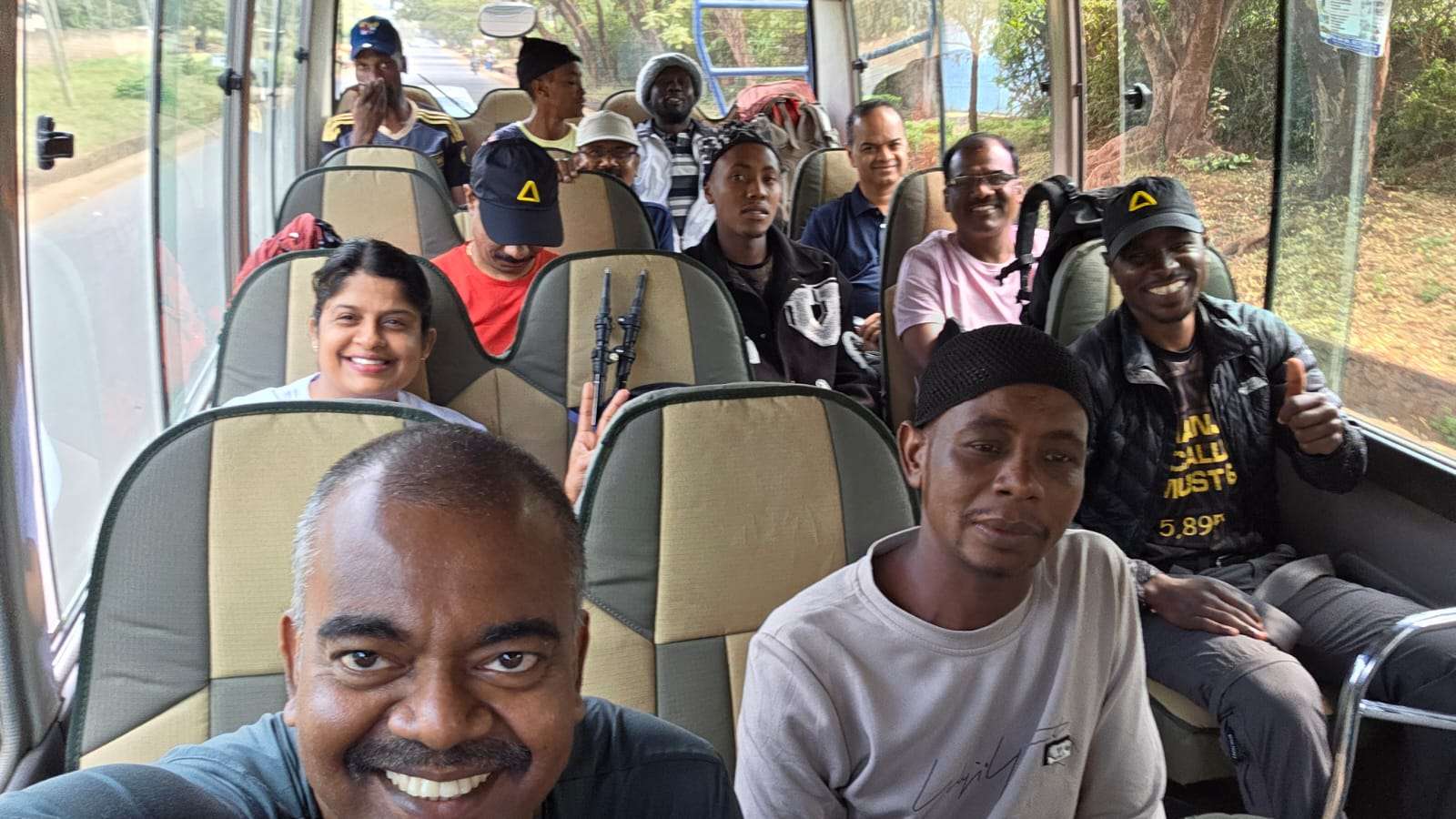
On the bus with the trekking crew
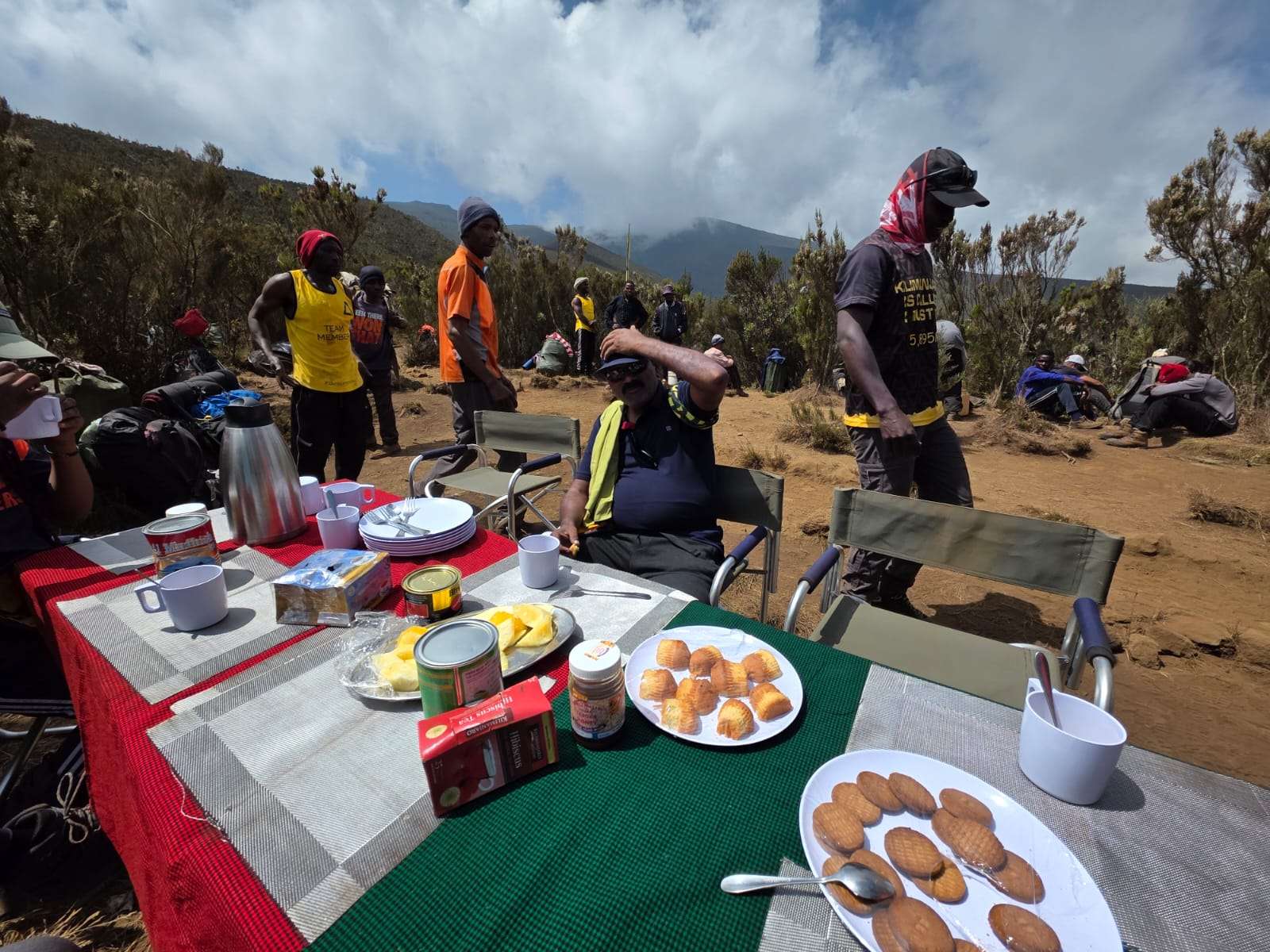
Open air snacks and coffee to build strength
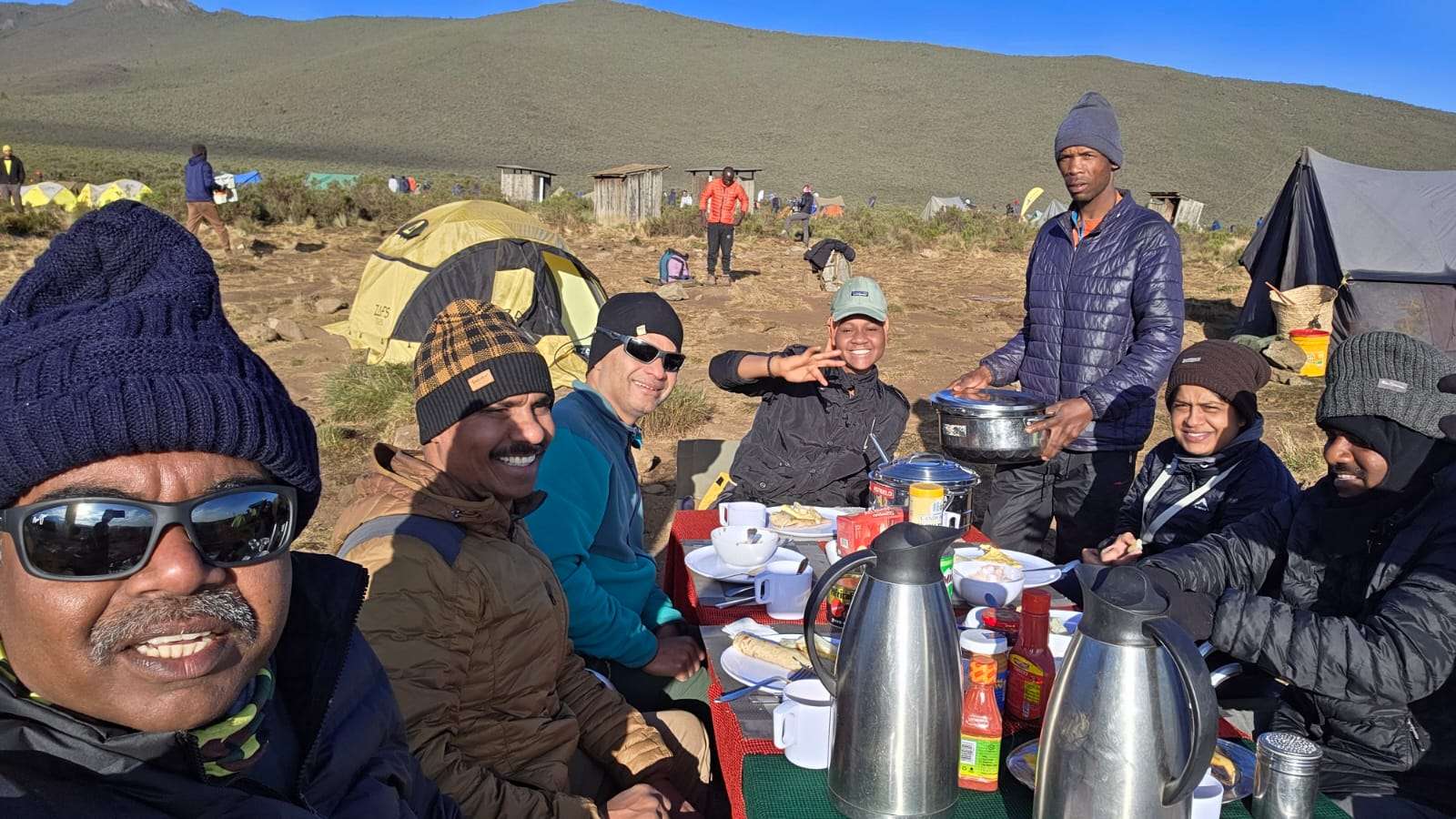
Warming up while having breakfast
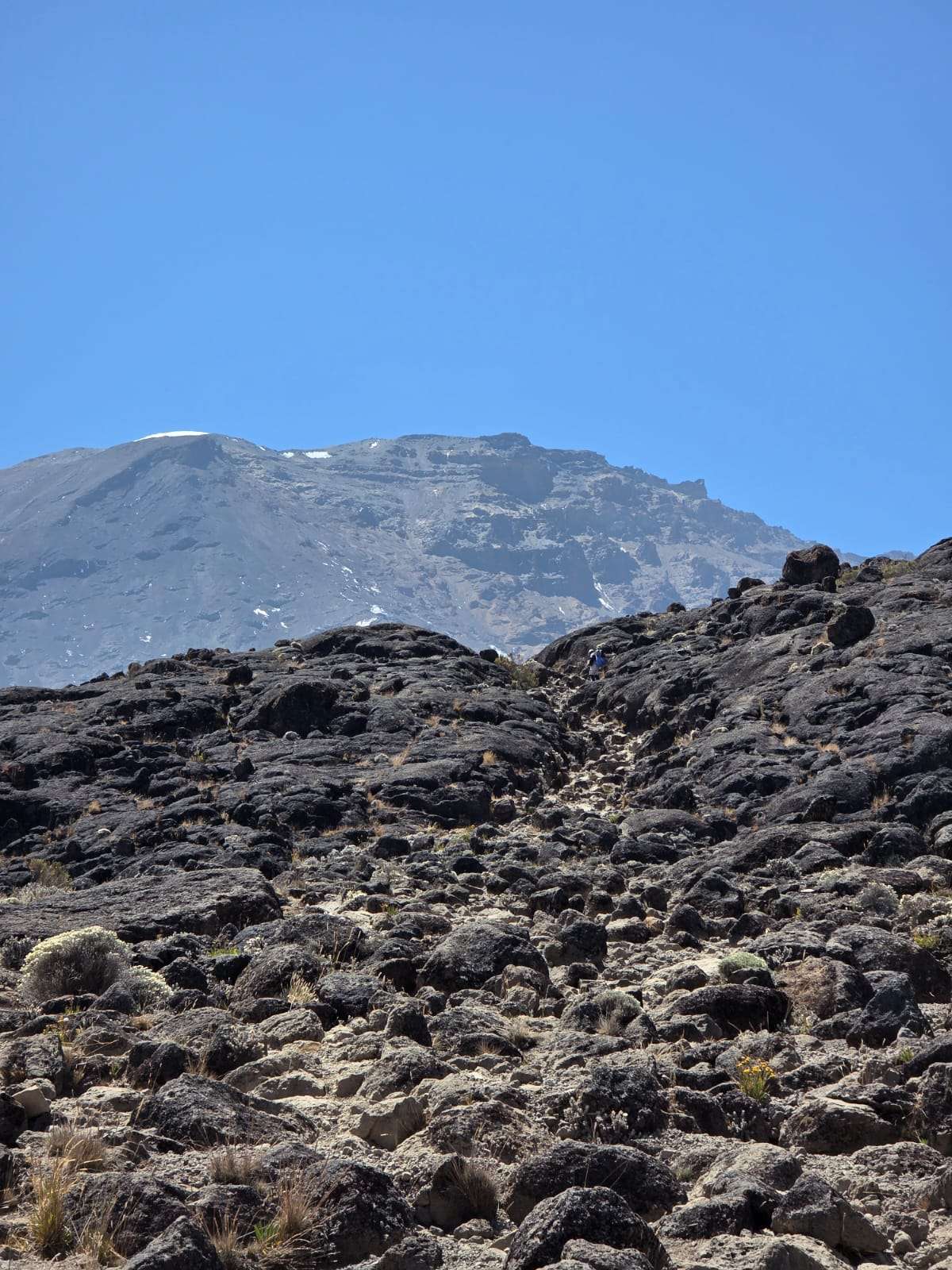
Looking back the snow covered Kilimanjaro peak as I walk down